
TriDeltathon is a name with a long connection to endurance sports, the University of Tennessee, and charity fundraising in Knoxville, Tennessee. For many years, the event brought swimming, cycling, and running together in a short-format triathlon that welcomed both experienced competitors and people trying multisport racing for the first time.
However, anyone searching for TriDeltathon today should know an important detail: the historic TriDeltathon and the more recent TriDeltaRUN are not exactly the same event format.
The traditional race was a pool-based triathlon. More recent event information points to TriDeltaRUN, a 5K connected to the same university community and charitable tradition.

This guide explains the history, race distances, unusual pool format, community role, and what people should know when looking for current TriDeltathon information.
What Is TriDeltathon?
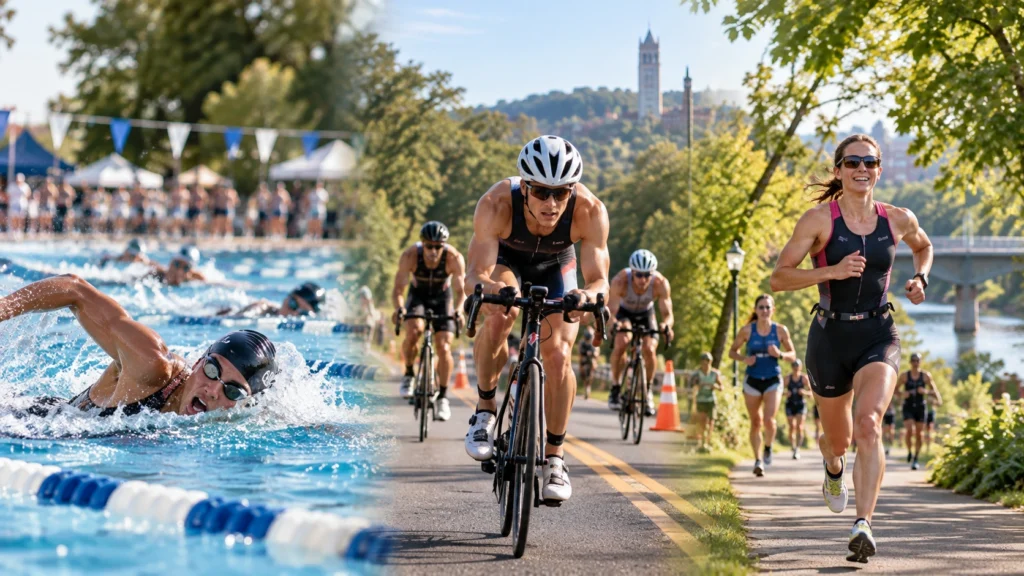
TriDeltathon was a short-distance triathlon associated with the University of Tennessee in Knoxville. Instead of beginning in a lake or other open-water location, competitors started the race in a swimming pool.
After completing the swim, participants moved to the cycling section and then finished with a run.
Archived registration information shows that the event included both individual and relay participation. The 2020 listing, for example, offered an individual event as well as a TriDeltathon relay.
The compact format was one of its most interesting features. Participants could experience the three major parts of a triathlon without taking on the much longer distances found in Olympic-distance or long-course events.
TriDeltathon at a Glance
| Feature | Historic TriDeltathon | More Recent TriDeltaRUN |
|---|---|---|
| Event type | Pool-based triathlon | 5K running event |
| Location | Knoxville, Tennessee | Knoxville, Tennessee |
| University connection | University of Tennessee | University of Tennessee area |
| Swim | 400 meters | None |
| Bike | 6 miles | None |
| Run | 3 miles | 5 kilometers |
| Main challenge | Three sports and transitions | Running/walking |
| Community focus | Charity fundraising | Charity fundraising |
| Skill requirement | Swimming, cycling and running | Mainly running/walking |
The distinction matters because older TriDeltathon pages may still appear in search results even though newer related events use a different format.
Why Was TriDeltathon Different?
Most people picture an open lake, wetsuits, bicycles, and a long road course when they hear the word “triathlon.”
TriDeltathon offered a different experience.
Its swimming section took place in a pool. This removed some of the uncertainty associated with open-water swimming, such as waves, currents and large mass starts.
The shorter overall distance also created a different type of challenge. Rather than relying only on long-distance endurance, athletes needed to move efficiently from one discipline to another.
For newcomers, that could make the event an introduction to multisport racing. For experienced competitors, the short course could still provide a fast and demanding race.
The Traditional TriDeltathon Distances
Historic descriptions commonly list three main stages:
400-meter swim: The event began with swimming. A 400-meter distance is short compared with many larger triathlons, but pacing still matters because competitors need energy for the bike and run.
6-mile bike: After leaving the pool and completing the first transition, participants moved to the cycling section. Six miles made this a relatively compact cycling leg.
3-mile run: The final section was a three-mile run. This is where participants had to adjust from cycling to running while already carrying fatigue from the first two disciplines.
Together, these stages created an accessible but genuine multisport challenge.
The Importance of Transitions
Triathlon is not simply three separate sports placed next to one another.
Transitions matter too.
The first transition takes the athlete from swimming to cycling. Participants need to leave the water, prepare their cycling equipment and get onto the bike safely.
The second transition moves them from cycling to running.
Even on a short course, losing unnecessary time during transitions can affect the overall result. More importantly for beginners, practising transitions can make race day feel much more organized.
A participant might therefore train not only for swimming, cycling and running but also for moving smoothly between them.
A Race Connected to Knoxville
TriDeltathon developed a strong local identity because of its association with Knoxville and the University of Tennessee.
The university environment gave the event more than just a physical location. Students, volunteers, participants and supporters could all become part of race day.
This campus connection helped distinguish it from a generic road race.
Rather than simply completing a distance, participants were taking part in an event linked to a particular community and charitable purpose.
More Than a Competition
The charity element is an important part of understanding why TriDeltathon attracted attention.
The event was connected with fundraising benefiting children and families in East Tennessee. More recent descriptions of the related TriDeltaRUN identify East Tennessee Children’s Hospital and Camp Eagle’s Nest in connection with the fundraising effort.
That means participation had a purpose beyond finishing times.
Athletes could challenge themselves physically while contributing to a community effort. Volunteers also played an important role by supporting the race even if they were not competing.
This combination of sport, university participation and fundraising gave the event its distinctive identity.
Individual vs Relay Participation
One useful feature of the historic event was the availability of different ways to participate.
Archived registration information confirms individual and relay categories.
An individual participant would complete the different disciplines personally.
A relay format could allow responsibilities to be divided among team members. That creates another way for people to experience a multisport event, particularly when one person is comfortable swimming while another prefers cycling or running.
Relay participation can also add a social element to endurance racing because completing the event becomes a team effort.
What Happened in 2020?
The 2020 edition is an important point in the TriDeltathon timeline.
The archived registration page lists an event planned for April 19, 2020, but it also clearly states that TriDeltathon 2020 was cancelled after the University of Tennessee moved to online operations during the COVID-19 period.
This is important when researching the event online.
Old registration pages can remain visible for years. A page containing an event date does not necessarily prove that the race actually took place.
Researchers and potential participants should therefore pay attention to cancellation notices and the year attached to each listing.
From TriDeltathon to TriDeltaRUN
One of the biggest changes is the appearance of TriDeltaRUN as the more recent version of the fundraising event.
Rather than combining three disciplines, TriDeltaRUN uses a 5K format.
The verified 2026 information described a 5K connected to Delta Delta Delta and the same broader charitable tradition. The 2026 listing was for April 19, meaning that date is already in the past as of September 2026.
This distinction is especially useful for anyone searching “TriDeltathon 2026” or trying to register.
Historic information describes a triathlon, while recent information describes a running event.
Why a 5K Creates a Different Experience
A 5K and a triathlon require very different preparation.
For the historic TriDeltathon, an individual competitor needed to prepare for swimming, cycling and running. Equipment planning was also more complicated because a bicycle and other race gear were involved.
A 5K removes most of that complexity.
Participants can concentrate primarily on covering approximately 3.1 miles on foot. This potentially makes the event approachable to a broader range of participants because specialized swimming and cycling preparation is no longer necessary.
The spirit of the event can therefore remain connected to community and fundraising even though the athletic format changes.
The Modern Course Setting
Recent TriDeltaRUN descriptions place the event around UT Gardens and Third Creek Greenway.
This keeps the newer event close to the University of Tennessee environment associated with the historic race.
The greenway format also provides a setting that makes sense for a standalone running event.
However, runners should never assume that an older course description will apply to a future edition. Routes can change because of construction, access restrictions, safety requirements or organizer decisions.
Always check the latest official registration information before race day.
Preparing for a Similar Short Triathlon
Although the current related event has moved toward a 5K format, the historic TriDeltathon offers useful lessons for anyone interested in trying a sprint or beginner-friendly triathlon.
Start by becoming comfortable in all three disciplines.
You do not necessarily need elite speed. Consistency matters more for a beginner.
Swimming technique can help reduce unnecessary fatigue. Cycling practice develops confidence and control, while regular running prepares the legs for the final section.
Combined sessions can be particularly useful.
For example, cycling followed immediately by a short run helps your body become familiar with the unusual feeling of running after getting off a bicycle.
Transition practice is useful as well.
Race-Day Preparation
Preparation should begin before arriving at the starting area.
Participants in any multisport race should check equipment, clothing and event instructions ahead of time. A forgotten item can create unnecessary stress.
Arriving early also gives athletes time to understand the transition area and follow organizer instructions.
For a running-only event such as TriDeltaRUN, preparation is simpler, but participants should still check the start time, route information, parking details, weather and any packet-pickup requirements.
Most importantly, use information published specifically for the edition you plan to attend.
Why People Still Search for TriDeltathon
TriDeltathon remains searchable because the name represents more than one race date.
It connects several ideas: university life, endurance sport, charity work, teamwork and Knoxville’s local sporting history.
People may discover the term through old race listings, previous participation, university connections or current TriDeltaRUN information.
That also explains why search results can sometimes seem confusing.
A person looking for a current race may find an archived triathlon page, while another page discusses the newer 5K.
Understanding the timeline solves much of that confusion.
Is TriDeltathon Still Happening?
The answer depends on what someone means by “TriDeltathon.”
The historic event was a swim-bike-run triathlon. Current information reviewed in 2026 instead points to TriDeltaRUN, a 5K that continues the related community and fundraising tradition.
It would therefore be misleading to assume that every modern mention of the event refers to the original triathlon format.
Similarly, an old race page should not be treated as confirmation of an upcoming event.
Participants should look for a newly dated registration announcement before making travel or training plans.
Final Thoughts
TriDeltathon holds an interesting place in Knoxville’s endurance-sports history. Its combination of a 400-meter pool swim, six-mile bike ride and three-mile run created a compact multisport challenge with a strong University of Tennessee connection.
What made it particularly meaningful was the combination of athletic participation and charitable support.
The event story has also changed over time. The traditional pool triathlon and the newer TriDeltaRUN should not be treated as identical races. The newer 5K represents a different athletic format while retaining links to the university community and charitable mission.
Leave a Reply